
What is Cold Rolling? How is it Done?
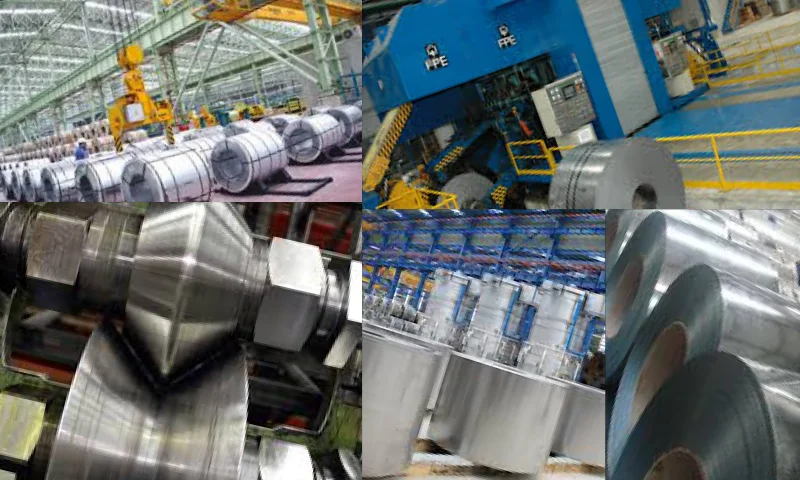
What is Cold Rolling Used for Shaping Steel? How is it Done?
Rolling is the process of plastically shaping a material using two rollers that rotate around their own axis at the same speed but in opposite directions. It is used in the shaping of metal. Steel is the raw material for many products. Many methods are used to shape steel. Often, it is shaped by applying a certain temperature and using molds. Rolling is the process of plastically shaping a material using two rollers that rotate around their own axis at the same speed but in opposite directions. It is used in the shaping of metal. The difference between cold rolling and hot rolling is that the material to be shaped is cold, but the rollers that shape it are hot. In hot rolling, the rollers are cold, and the materials to be shaped are hot. Steel produced as a semi-finished product is cut while cold, packaged, and prepared for the customer. This process, the cutting and packaging of steel into desired dimensions while cold, is called cold rolling. Flat products are produced using this method. In the production phase, different production outcomes occur in rolling depending on the production characteristics and difficulties. Cold rolling is divided into three types based on the differences in production characteristics. Productions Made with Cold Rolling Hot product production: Hot products are obtained by applying one or more of the processes such as pickling, edge trimming, and length cutting. These processes are applied to hot coils.
Cold product production:
It is done through pickling, annealing, and length cutting, i.e., stacking. The processes are again applied to hot coils. And as a result, cold products are obtained. Tin products coated with chrome or tin: Applied to cold coils. The coils are coated with tin or chrome. This results in tin products coated with chrome and tin. The process part in cold rolling is largely carried out according to customer requests. Cold rolling is performed based on characteristics such as the desired thickness of the sheet metal, whether the customer will perform grinding, cleaning, and rolling processes themselves, for what purpose and where the material will be used, whether the sheet is desired as a long coil or a plate, and in what dimensions. Cold rolling primarily allows surface treatments to be performed after the material has been shaped. At the same time, it is more about shaping along the length rather than the width of the material. Cold rolling is usually performed after hot rolling. It provides a higher quality surface finish. And as a result of these production processes, the strength of the produced material increases. In cold rolling, the shaping ratio and shaping speed are low, but the surface properties are good. For this reason, it functions very well in the final stage. Products with small cross-sections such as sheet metal, thin bars, foil, and wire are obtained using the cold rolling method. After rolling, the material becomes much harder than its initial state. For these reasons, cold rolling is a preferred type of shaping in the industrial field.