
What is a DIAC?
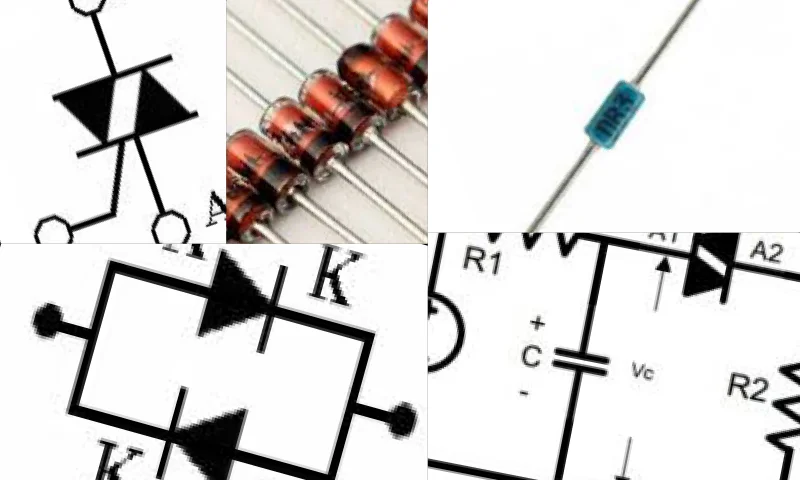
We use many electronic devices to make our daily lives easier. However, we have very little knowledge about the internal structure of these devices. Generally, we have no idea what something is or what it is used for. We are only just learning that we can even bake cakes in a microwave. This invention, whose sole purpose for us is to reheat cold food, is actually quite functional. There are many small but highly functional by-products that make our lives easier. Although these products may not have meaning on their own, when they are combined with a set of components, they provide solutions to very large tasks for us. The DIAC is one of these products.
• The DIAC is designed to be a semiconductor
• It is a substance with two terminals
• It has four regions
• It is frequently used in electronic circuits
• It has a structure similar to a diode
• They are connected in reverse to each other
• It resembles a parallel diode
What is it Used For?
We said that the DIAC consists of 4 regions. This substance, which has a 4-region part, creates doping regions with its semiconductor property. When the DIAC is correctly connected to the circuit, if the current called t1 is positive, it has been observed that the current will flow from the t1 direction to t2. If t2 has a positive current characteristic, the current will flow again in the t1 direction. In other words, the circuit called a DIAC allows the current to flow back and forth in two directions. For a diode to activate in current, a current between 0.6 and 0.7 is required. However, there is no such limit for a DIAC. It varies according to its purpose. A current between 20v or 50v is generally the best for its intended uses. Generally, this current element is used for controlling motors. It may also be necessary for the flashing of electric lights. As the New Year approaches, you see lights connected to a cable that constantly move forward and backward in many places. All of these lighting systems definitely contain a DIAC inside. These systems absolutely require a DIAC component to maintain the correct flow of electric current. It is also found in the triggering systems of cars, speedboats, spacecraft, washing machines, in short, in all devices that require sustained electric current. These small electrical circuits actually provide the necessary energy for the whole. All the large structures you see are a form of casing. Underneath the casing processes, which are done to keep the electrical components from being exposed, there are actually wonderful discoveries measured in microns and millimeters. Thanks to the DIAC, many circuits in your life continue to function flawlessly.